What Is an Orthomosaic Map and How Construction Teams Use It
Key Takeaways
- An orthomosaic map is a georeferenced, distortion-free aerial image created by stitching hundreds of overlapping drone photos together using photogrammetry software
- Unlike standard aerial photos, orthomosaics have a consistent scale, so real distances and areas can be measured directly from the image
- Construction teams use orthomosaic maps for pre-construction site analysis, progress monitoring, volumetric calculations, quality control, and stakeholder reporting
- Drone-generated orthomosaics are far more current and higher resolution than satellite imagery from tools like Google Maps
- A single drone flight can produce both a 2D orthomosaic map and a 3D surface model from the same data set
If you've come across the word "orthomosaic" in a project meeting or a drone services proposal and weren't quite sure what it meant, you're in good company. It sounds technical, and in some ways it is. But the underlying idea is straightforward once you see it clearly.
An orthomosaic map is a high-resolution, georeferenced aerial image built by combining hundreds of individual drone photos into one seamless, spatially accurate map. It's not just an aerial view of a site. It's a measurable, distortion-free document you can use to take accurate measurements, compare site conditions over time, and make real project decisions.
That distinction matters more than it might seem at first.
What Makes an Orthomosaic Different From a Regular Aerial Photo
A standard aerial photo has a fundamental problem: it's distorted. Lens angle, camera tilt, and variations in terrain all affect the perspective of a photo. The closer you are to the edge of the frame, the more that distortion compounds. So if you try to measure a distance across a regular aerial photo, you're going to get an inaccurate result, especially on uneven ground.
An orthomosaic addresses this through a process called orthorectification. Each individual image captured during the drone flight is corrected for lens distortion, camera tilt, and topographic variation before it's stitched into the larger map. Every pixel in the final image is tied to a real-world GPS coordinate, and the scale stays consistent across the entire surface.
Think of it this way: a regular drone photo shows you the site. An orthomosaic lets you actually work with it.
This is also why orthomosaics are so much more useful than satellite imagery for active construction projects. Google Earth and similar tools can give you a rough overhead view, but that imagery is often months or even years out of date. For a project that changes week to week, that's not a workable data source. Drone-generated orthomosaics can be captured, processed, and delivered within 24 to 48 hours of the flight.
How an Orthomosaic Map Is Created
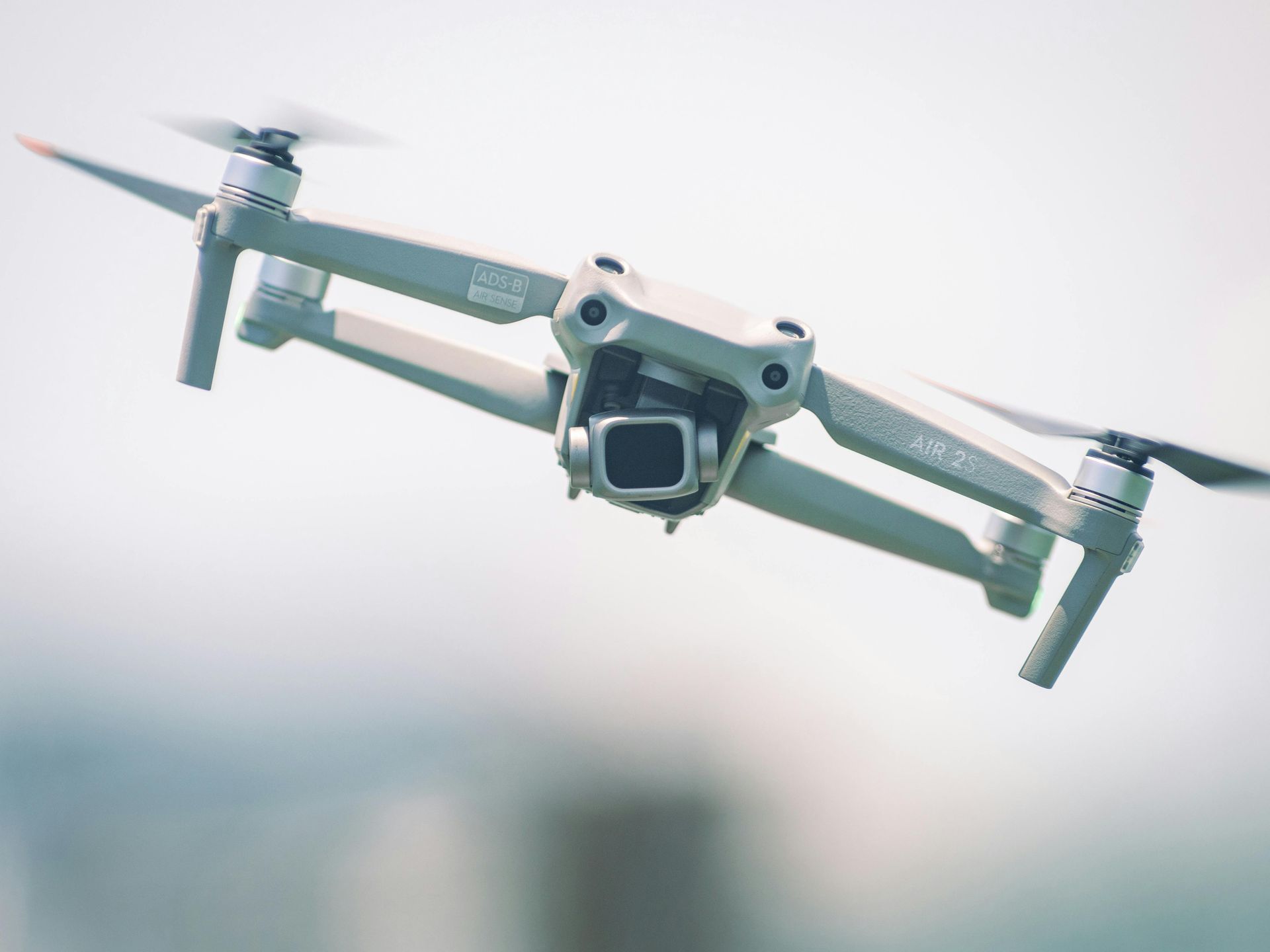
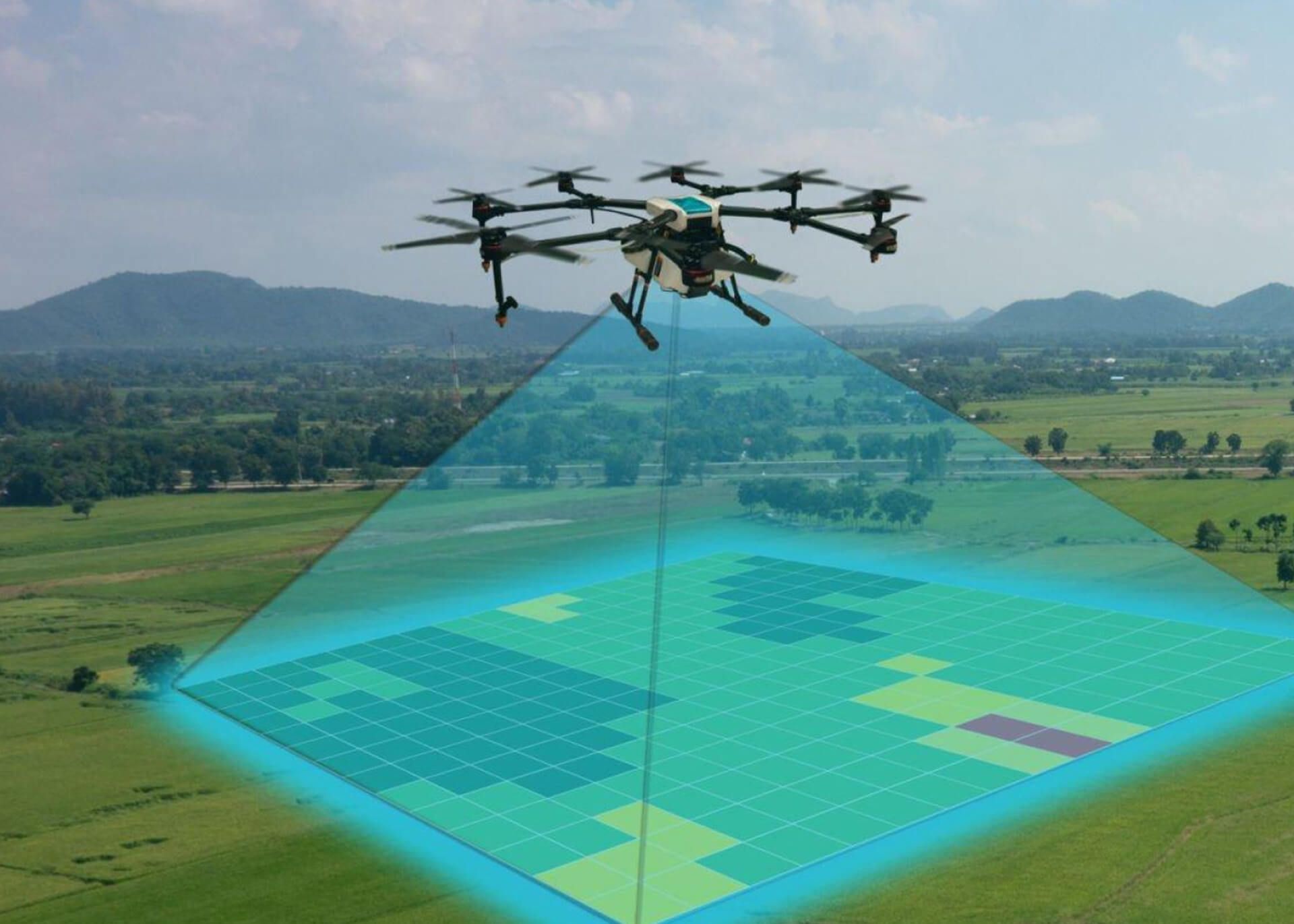
The flight itself is systematic. The drone follows a planned grid pattern over the project area at a consistent altitude, capturing images with significant overlap between adjacent frames, typically 70 to 80 percent. That overlap is the key ingredient. It gives the photogrammetry software enough shared reference points to align every image accurately and correct for distortion across the full mosaic.
Once the flight wraps up, the imagery is processed through photogrammetry software, which identifies matching features across overlapping photos, aligns them using GPS data, applies orthorectification corrections, and outputs a single unified map. Depending on site size and resolution requirements, the finished orthomosaic can be accurate to within a few centimeters on the ground.
The same data set also generates a 3D point cloud and surface model, which we'll get to shortly.
It's worth knowing that commercial drone operations require FAA Part 107 certification and that flight planning must account for local airspace conditions and any required authorizations. Not every drone operator who can fly also knows how to plan and execute a proper mapping mission. When you're hiring for this work, that gap matters.
How Construction Teams Use Orthomosaic Maps
So what does this look like in practice? Orthomosaic maps aren't useful in just one phase of a project. They support construction teams from pre-construction planning all the way through final documentation.
Pre-Construction Site Analysis
Before grading begins, an orthomosaic gives your engineering team an accurate, current view of the entire site. Existing topography, drainage features, access routes, and surrounding infrastructure can all be evaluated from the map. Building plans can be overlaid directly on the aerial image to check for conflicts before any work begins.
Catching a problem at this stage is far less expensive than catching it after work has started. If a utility line or drainage feature isn't where it was assumed to be, that's information you want in week one, not week six.
Progress Monitoring
Recurring drone flights over an active site produce a time-stamped sequence of orthomosaics documenting exactly how the project is developing.
Each new map can be compared directly to the previous one, giving project managers a side-by-side view of what's changed, what's on track, and what's fallen behind. For large commercial and industrial projects where not every stakeholder can visit the site regularly, this kind of regular visual reporting changes the dynamic completely. Off-site owners, investors, and project executives can stay informed without the overhead of a physical site visit every time there's a progress question.
Volumetric and Earthwork Calculations
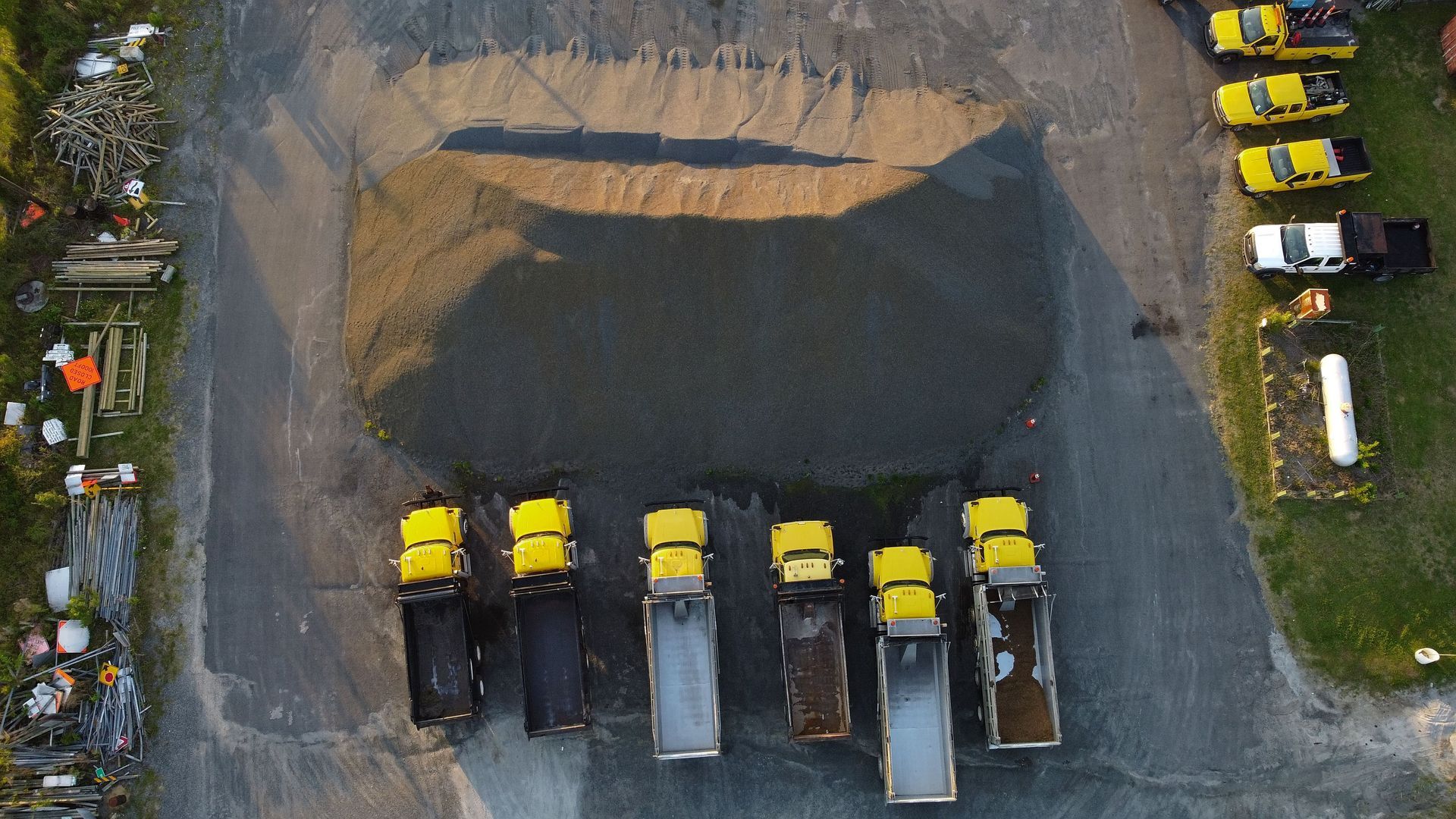
Civil and grading contractors tend to recognize the value here immediately. From the 3D surface data generated during the same drone flight, it's possible to calculate cut and fill volumes, measure stockpile quantities, and track earthwork progress against the design model, all without sending a survey crew into the field.
Traditional volume surveys require ground crews, equipment, and significant time. A drone covers the same area in a fraction of that, and the process can be repeated on a weekly or bi-weekly cycle so tracking stays current. Over the course of a long grading project, that kind of regular data cadence is hard to replicate any other way.
Quality Control and As-Built Documentation
How do you verify that a slope was graded to spec, or that a foundation was poured in the right location? You can measure it directly from the orthomosaic. The spatial accuracy of the map means measurements taken from it are defensible and repeatable.
As-built documentation from drone mapping flights creates a permanent, verifiable record of site conditions at every phase of the project. That record has practical value for punch list reviews, warranty claims, regulatory compliance, and resolving disputes that sometimes surface after a project closes.
Stakeholder Communication
Not everyone reading a project update has a construction background. Orthomosaic maps are one of the most effective tools for communicating project status to people who aren't on-site. Investors, property owners, city officials, and lenders can all look at a clearly annotated aerial map and understand what's been completed, what's in progress, and how it compares to the original plan.
That visual clarity builds confidence. It replaces lengthy narrative updates with something that's immediately understandable, and it reduces the back-and-forth that typically comes from progress reports that don't include good visuals.
From 2D Maps to 3D Models
One flight. Two deliverables.
The same overlapping imagery that produces the 2D orthomosaic can be processed into a 3D surface model. These models add another layer of analysis for tasks like slope visualization, elevation comparison, and volume calculations that require terrain data rather than a flat overhead view. For most commercial construction applications, both outputs come from the same data collection session.
Our drone mapping services in Ohio include 2D orthomosaic maps and 3D models as standard deliverables, formatted for use in GIS platforms, project management software, and BIM workflows. You're not paying for two separate flights to get both.
Why Orthomosaic Mapping Beats Traditional Surveys for Most Construction Needs
Traditional ground surveying still has its place, particularly for legally precise boundary work where monument-based accuracy standards apply. But for site documentation, progress tracking, and volumetric analysis, drone-based orthomosaics are faster, more repeatable, and in most cases more cost-effective.
A ground survey crew working a large, active site may need a full day or more. Drone coverage of the same area typically takes a couple of hours, with deliverables ready within 48 hours of the flight. And because the process is repeatable with consistent flight parameters, maps taken weeks apart can be compared with confidence.
The American Society for Photogrammetry and Remote Sensing (ASPRS) has established widely referenced accuracy standards for UAV-based mapping that professional drone mapping operations follow. So the precision you'd expect from a properly executed orthomosaic isn't marketing language. It's a technically validated methodology with documented performance benchmarks.
But is drone orthomosaic mapping always the right tool? For most active commercial construction sites, yes. If your project is very small, doesn't require repeat documentation, or only needs simple aerial photography for a presentation, a full orthomosaic program may be more than the job calls for. It's worth having that conversation up front.
What to Expect When You Request a Drone Mapping Flight
The process doesn't need to be complicated. You share the project site, define the scope, and we handle everything from there: flight planning, airspace coordination, data capture, processing, and delivery.
Our construction drone services in Ohio are built around how construction teams actually work, which means deliverables come formatted for practical use. Orthomosaic maps, 3D models, and measurement-ready imagery can be delivered via Google Drive or your preferred method within 48 hours of the flight.
If your project involves structural or rooftop conditions in addition to site mapping, we can pair the orthomosaic flight with a dedicated aerial drone inspection during the same mobilization. That keeps scheduling simple and maximizes what you get out of each site visit.
We work directly with construction teams, property owners, and developers across Ohio. No broker platforms, no layers of subcontractors. Our team handles the project from the first call to final delivery. You can browse our recent work to see what drone mapping data looks like on real commercial projects.
If you're planning a project in Ohio, Kentucky, or Indiana and want to discuss how orthomosaic mapping fits your workflow, contact 1st Choice Aerials to request a quote or talk through the options. We'll be direct about what you need and what you don't.
Frequently Asked Questions
What is an orthomosaic map in simple terms? An orthomosaic map is a large, high-resolution aerial image made by stitching together hundreds of overlapping drone photos. Each photo is corrected for distortion and tied to GPS coordinates, so the final map is spatially accurate and measurable.
How is an orthomosaic different from a regular drone photo? A standard drone photo has perspective distortion and an inconsistent scale across the frame. An orthomosaic has been corrected for lens angle, camera tilt, and terrain variation, so every point in the image corresponds to a real-world location with a consistent, usable scale.
How accurate is a drone orthomosaic map? When captured with RTK or PPK GPS-enabled equipment and processed with professional photogrammetry software, drone orthomosaics can achieve ground accuracy within a few centimeters. Accuracy depends on flight altitude, camera resolution, image overlap, and whether ground control points are used.
How long does it take to receive an orthomosaic map after the drone flight? At 1st Choice Aerials, most orthomosaic deliverables are turned around within 24 to 48 hours of the drone flight, depending on site size and processing scope.
Can an orthomosaic map be used for volumetric calculations? Yes. The 3D surface data generated from the same drone flight that produces the orthomosaic can be used to calculate cut and fill volumes, measure stockpile quantities, and track earthwork progress against design specifications.
What software is used to process orthomosaic maps? Professional photogrammetry platforms such as Pix4D, DroneDeploy, and DJI Terra are commonly used to process drone imagery into orthomosaic maps and 3D models.
Do I need to be on-site during the drone mapping flight? Not necessarily. We can coordinate with a site contact or work independently, depending on project logistics and access requirements. All flight planning, airspace coordination, and scheduling are handled by our team.