How Drone Data Fits Into Modern Construction Workflows
Key Takeaways:
- Drone data isn't just aerial photography. It includes orthomosaic maps, 3D models, volumetric measurements, thermal reports, and timestamped progress documentation.
- Construction teams can apply drone data at nearly every project phase: pre-build surveys, active progress monitoring, inspections, and final documentation.
- RTK-enabled commercial drones can achieve centimeter-level positioning accuracy, making the data reliable enough for engineering and planning decisions.
- Thermal imaging identifies issues invisible to standard cameras, including moisture intrusion, insulation failures, and electrical anomalies on active build sites.
- Working directly with a certified, insured provider rather than a broker platform ensures consistent data quality, faster turnaround, and real accountability.
Construction projects don't fail because of bad intentions. They fail because of incomplete information, poor communication, and decisions made without an accurate picture of what's actually happening on site.
That's where drone data has quietly become one of the more practical tools in modern construction workflows. Not as a novelty, but as a real part of how teams plan, manage, and document their work. At 1st Choice Aerials, we work with construction companies, contractors, and commercial property owners across Ohio who want usable data, not just aerial photos. So here's an honest look at how drone data fits into a construction workflow, phase by phase.
What Drone Data Actually Means on a Construction Site
When most people picture a drone on a jobsite, they imagine a camera flying around capturing video footage. That's part of it. But the real value comes from what happens after the flight.
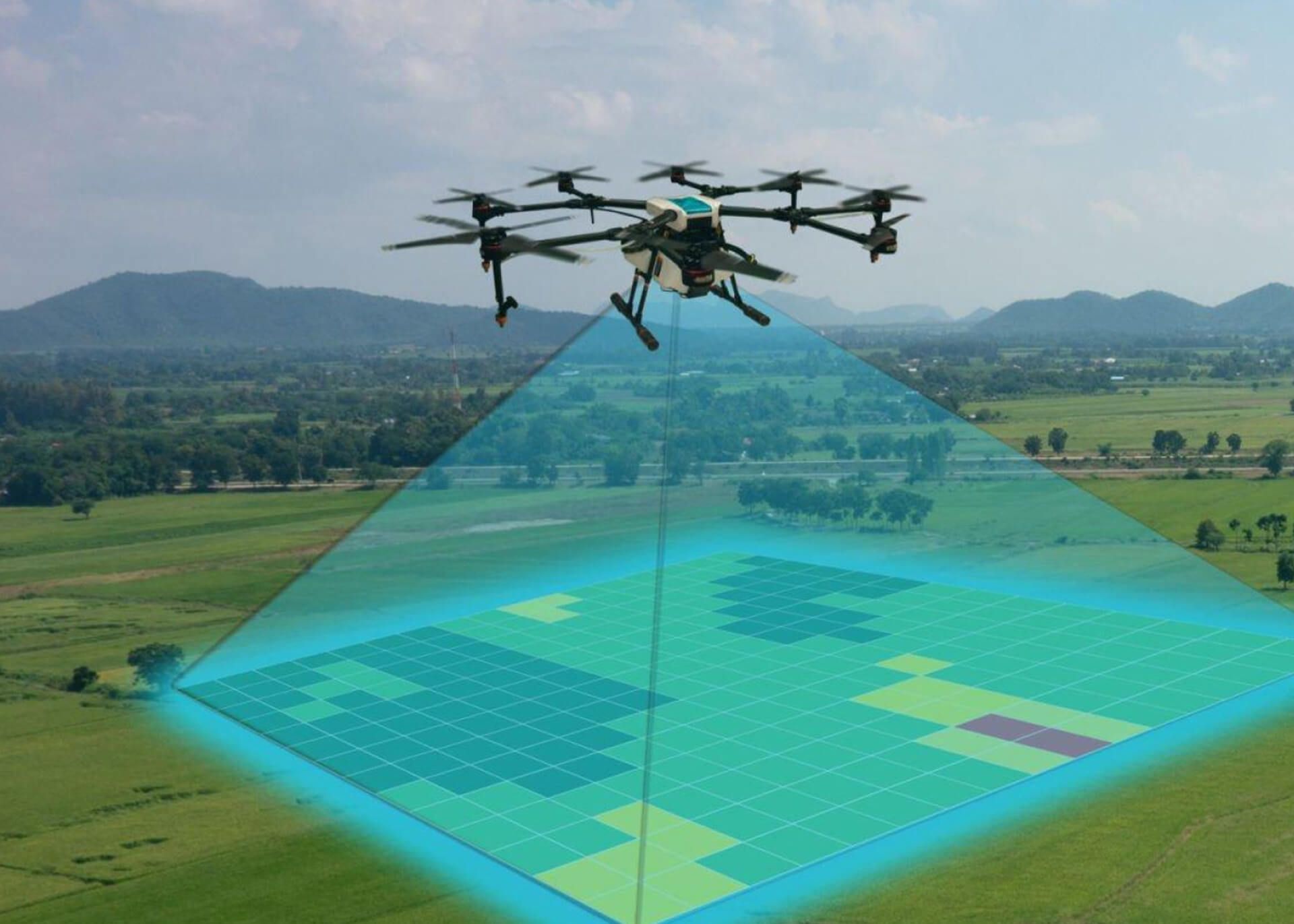
A single structured drone mission captures hundreds of overlapping, high-resolution images that photogrammetry software then processes into precise, geo-referenced deliverables. We're talking about orthomosaic maps, 3D surface models, digital elevation models, and volumetric calculations. These aren't decorative images. They're measurement tools.
From Raw Imagery to Project-Ready Deliverables
Depending on what a project needs, drone data can be processed into several distinct outputs:
- Orthomosaic maps: Geometrically corrected aerial maps with uniform scale, accurate enough for layout planning, progress documentation, and stakeholder reporting.
- 3D site models: Surface models used to verify earthwork, assess grading, and check field conditions against design plans.
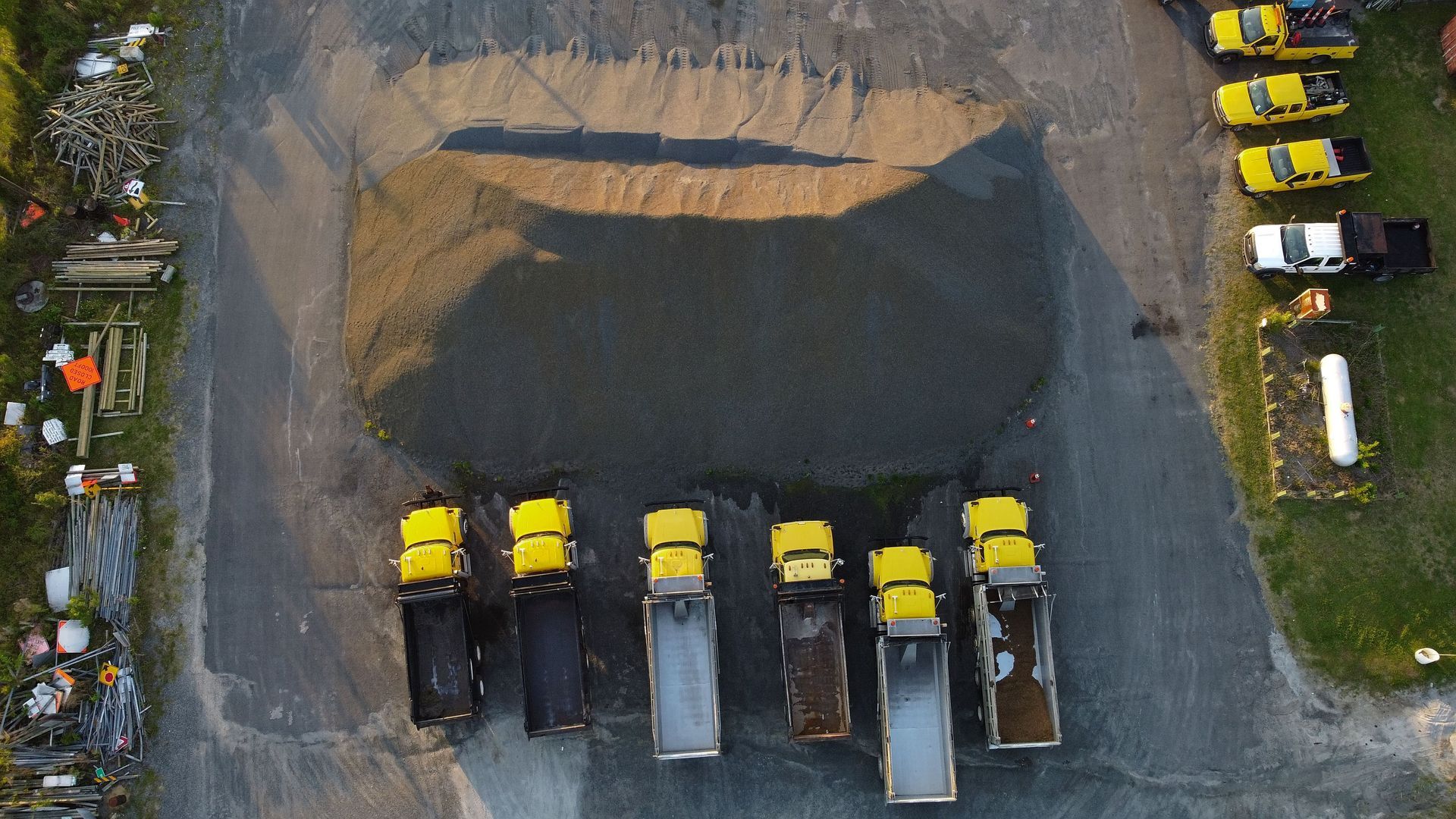
- Volumetric measurements: Stockpile and cut/fill calculations that support billing verification and material management.
- Thermal imagery and reports: Heat-mapped data that identifies moisture, insulation issues, or electrical anomalies that standard cameras simply can't detect.
- Progress photo sets: Organized, timestamped aerial documentation for client updates and compliance records.
Each output serves a different purpose across the project lifecycle. Getting all of them from a single local provider, typically delivered within 48 hours, changes how a team can operate.
Pre-Construction: Surveys, Planning, and Site Assessment
Before the first excavator breaks ground, drone data can significantly reduce guesswork in the planning phase.
Topographic surveys using RTK-enabled drones can achieve centimeter-level accuracy, giving design teams reliable data for grading plans, drainage calculations, and site logistics. Propeller Aero's research on drone surveying makes clear that the accuracy of volumetric measurements directly affects whether a project stays profitable. Earth-moving errors caught early prevent costly change orders later. And in most cases, a drone can cover a 100-acre site in under an hour, while the same coverage on foot could take days.
Pre-construction drone surveys also establish a baseline. That initial orthomosaic map becomes a reference point for every subsequent survey and comparison throughout the build.
Our drone mapping services in Ohio include both one-time site surveys and recurring documentation plans for active projects, so teams can get the pre-build snapshot they need and continue tracking changes from there.
Progress Monitoring That Keeps Teams Aligned
How often does a project manager actually have an accurate, up-to-date view of the entire site?
In most cases, progress updates get pieced together from ground-level site walks, crew reports, and photos that don't show the full picture. It works, but it's slow, partial, and leaves room for surprises. Recurring drone flights, weekly or bi-weekly depending on project pace, give project teams a consistent aerial record of the build.
Orthomosaic maps captured at regular intervals can be compared side by side, so changes are visible and measurable rather than estimated. This makes it straightforward to verify completed work, flag potential schedule issues before they compound, and produce documentation that clients and stakeholders can actually understand.
When disputes arise over what was completed, when, and to what standard, aerial documentation is harder to argue with than verbal accounts. That alone is worth planning around.
Our construction drone services in Ohio include progress monitoring designed specifically for commercial and industrial build sites, with deliverables organized for practical use, not raw files you have to sort out yourself.
Inspections Without Putting Workers at Risk
Some of the most valuable construction drone applications involve inspection work, particularly in situations where getting a person to the inspection point is slow, expensive, or outright dangerous.
Rooftops, tall structural components, facades, water towers, and overhead confined spaces all fall into this category. Traditional inspections in these areas require lifts, scaffolding, or rope access. A drone can capture detailed imagery of those same areas in a fraction of the time and without the associated safety exposure.
The FAA requires commercial drone operators to hold Part 107 certification, covering airspace regulations, safety procedures, and responsible operation near structures and people. Working with a certified, fully insured provider isn't just a legal baseline. It's the difference between reliable inspection data and a liability problem.
Thermal Imaging Changes What You Can See
Standard visual inspections have limits. Thermal imaging changes what's detectable.
Our aerial thermal inspections and thermography services use infrared sensors to capture heat signatures across large surface areas during a single flight. On active construction sites, this data can identify moisture intrusion behind finishes, insulation gaps or failures in building envelopes, and heat anomalies in electrical systems, all before walls are closed or systems are fully commissioned. Finding a moisture problem during construction is a very different situation from finding it after occupancy.
For roofing, facades, and building envelope work specifically, this kind of data turns a routine inspection into a diagnostic tool.
Volumetric Measurements and Stockpile Tracking
One of the less discussed uses of drone data, but one that hits the bottom line directly, is stockpile and earthwork volume measurement.
Traditionally, measuring material volumes meant sending a survey crew out with ground equipment, waiting on results, and hoping the numbers were reasonably close. Drone photogrammetry processes overlapping images into point clouds that quantify volumes with documented accuracy. For earthmoving projects, this data supports subcontractor billing verification, reduces over-ordering risk, and creates an auditable record for project accounting.
It's not the part of drone services that gets highlighted in product demos. But for project managers running large earthwork contracts, it's often where drone data pays for itself most clearly.
Stakeholder Communication and Site Documentation
Construction projects involve a lot of people who aren't on site every day. Owners, investors, lenders, municipal agencies, and subcontractors all need periodic updates without requiring a physical walk-through each time. Keeping everyone informed has always been a friction point.
Clear, current aerial imagery simplifies that communication considerably. When you can send a client an orthomosaic map showing exactly what's been completed since the last update, conversations get shorter and more concrete. Progress reports backed by aerial data carry more weight than written summaries. And for permitting, environmental compliance, or insurance documentation, a visual record of site conditions at each phase is something that can't be recreated after the fact.
This is also where working directly with a local provider makes a real difference. Broker platforms that win the job and then subcontract the work through two or three layers of intermediaries introduce delays, inconsistency, and communication gaps that are hard to manage on an active build schedule. We work directly with our clients on every project, every time.
Drone Data as a Workflow, Not a One-Time Tool
Done well, drone data doesn't function as a single deliverable. It functions as a workflow layer that supports better decisions at every phase of a project.
The construction teams that get the most out of it aren't ordering a drone flight once. They're building aerial data collection into their regular project cadence, using it to stay ahead of issues instead of reacting to them after the fact. Site surveys before groundbreaking, progress flights during active construction, inspections at key milestones, thermal sweeps before systems are enclosed.
At 1st Choice Aerials, our commercial drone services for construction are built around that kind of ongoing value, not a single transaction. We're FAA Part 107 certified, fully insured, and focused on delivering data your team can actually act on, within a turnaround that fits how construction actually moves.
If you've got a project coming up and want to understand how aerial data could fit your specific workflow, get in touch with our team. We'll give you a straight answer about what makes sense and what doesn't.
Frequently Asked Questions
What deliverables does a construction drone survey typically produce? A standard construction drone survey can produce orthomosaic maps, 3D surface models, digital elevation models, volumetric calculations, and high-resolution progress imagery, depending on the project scope. Most deliverables are ready within 24 to 48 hours of the flight.
How accurate is drone data compared to traditional surveying methods? RTK-enabled commercial drones can achieve centimeter-level positional accuracy, making the data suitable for planning, grading verification, and engineering review. Accuracy depends on equipment quality, flight planning, and whether ground control points are incorporated.
Can drone inspections replace traditional construction site inspections? Drone inspections work best as a complement to, not a complete replacement for, traditional inspection methods. They're well-suited for accessing elevated or hard-to-reach areas, capturing wide-area condition assessments, and reducing the time and safety exposure of manual inspection work. A certified provider can advise on which inspection types are best served by aerial data for a given project.
What is thermal imaging used for on active construction sites? Thermal, or infrared, drone inspections detect heat anomalies that aren't visible to standard cameras. On construction sites, common applications include identifying moisture intrusion behind finishes, verifying insulation continuity in building envelopes, and detecting electrical hotspots in early-stage building systems before walls are closed.
How often should a construction site be flown for progress monitoring? The right frequency depends on project pace and reporting requirements. Many active sites benefit from weekly or bi-weekly flights during key build phases. Slower-moving projects may use monthly documentation. Both one-time and recurring flight plans are available depending on what the project calls for.
What's the difference between working with a direct drone provider versus a broker platform? Broker platforms market aggressively, win the work, and then subcontract it, sometimes through multiple layers. That introduces delays, inconsistent quality, and limited accountability. Direct providers maintain control over every step from flight to delivery, which generally means faster turnaround, cleaner communication, and data you can rely on.
What should I look for in a commercial drone provider for a construction project? FAA Part 107 certification and appropriate liability insurance are the minimum baseline. Beyond that, look for providers with direct construction experience, not just general photography work. Ask about turnaround times, deliverable formats, and whether they operate directly with clients or route projects through third parties.